Hormone Testing
Functional hormone testing · For women tired of guessing
Finally know what's actually going on with your hormones — without another appointment.
At-home DUTCH hormone test kit + a recorded video walkthrough of your results from a functional practitioner + a personalized plan to address your symptoms — so instead of guessing what's wrong with your hormones, you finally know.
No waiting months to get in to an office. No scheduling. Just answers.
You've tried everything
And your hormones are still calling the shots.
You've tried seed cycling. Maybe a few rounds. You've cut out caffeine, added magnesium, tried a new birth control — or come off of it. You've asked your doctor about the PMS, the fatigue, the irregular cycles, and been told your labs look 'normal' — or handed an antidepressant and sent home with no real plan.
If any of this sounds familiar...
- Your PMS is getting worse, not better — and the week before your period feels unrecognizable
- You're exhausted by 3pm but wired at 11pm, no matter how 'good' your sleep hygiene is
- Your cycle is irregular, missing, or has gotten unpredictable in the last year or two
- You suspect perimenopause but your bloodwork keeps coming back 'fine'
- Mood swings, anxiety, or low motivation feel out of proportion to what's actually going on in your life
- You're gaining weight — especially around the middle — that doesn't respond to diet or exercise
- You've got acne, hair thinning, or low libido and you're tired of being told it's just stress
- You feel like every protocol works for a week or two, then stops
You're not imagining it. Your body is trying to tell you something — and guessing at what it needs hasn't worked because guesses aren't data.
And if you're a man reading this — this isn't only a women's issue. If you're dealing with fatigue, low drive, weight gain, brain fog, or a libido that isn't what it used to be, the same logic applies. 'Low T' is a label, not a cause — and guessing at it hasn't worked for the same reason.
Here's what most people miss
Your hormones aren't a mystery. They're a data problem.
Most hormone advice you've been given was built on symptom-matching: you have PMS, so try this supplement. You're tired, so cut carbs. Your cycle is irregular, so try this birth control. You think it's perimenopause, so wait it out.
Eat more protein. Eat less protein.
Cut out caffeine. Keep caffeine but only in the morning. Just kidding, do mushroom coffee.
Try ashwagandha. Avoid ashwagandha if your cortisol is low. Wait — is your cortisol low?
The same symptom can come from a dozen different underlying causes. PMS from low progesterone is a completely different problem than PMS from estrogen that isn't clearing properly. 'Hormonal' is a label — not a cause. And without knowing what's actually happening with your hormones, every protocol is a guess.
This is why the supplements didn't stick. Why seed cycling gave you a couple decent months and then stopped. Why the protocol that worked for your friend made you feel worse. You weren't doing it wrong — you were just working without data.
The DUTCH test changes the conversation. It's an at-home dried urine test that shows not just your hormone levels but how your body produces, metabolizes, and clears them — plus your cortisol rhythm across the day, melatonin, and key markers of oxidative stress and nutrient status. So instead of guessing, you can see.
And instead of waiting weeks for an appointment just to walk out with a prescription — or at best, a rushed list of supplements you don't even know what they do — you get a recorded video walkthrough of your specific results, explaining what they mean, what matters most, and exactly what to do next.
Here's what most people miss
Your hormones aren't a mystery. They're a data problem.
Most hormone advice you've been given was built on symptom-matching: you have PMS, so try this supplement. You're tired, so cut carbs. Your cycle is irregular, so try this birth control. You think it's perimenopause, so wait it out.
Eat more protein. Eat less protein.
Cut out caffeine. Keep caffeine but only in the morning. Just kidding, do mushroom coffee.
Try ashwagandha. Avoid ashwagandha if your cortisol is low. Wait — is your cortisol low?
No wonder your hormones feel confusing. You are too.
The same symptom can come from a dozen different underlying causes. PMS from low progesterone is a completely different problem than PMS from estrogen that isn't clearing properly. 'Hormonal' is a label — not a cause. And without knowing what's actually happening with your hormones, every protocol is a guess.
This is why the supplements didn't stick. Why seed cycling gave you a couple decent months and then stopped. Why the protocol that worked for your friend made you feel worse. You weren't doing it wrong — you were just working without data.
The DUTCH test changes the conversation. It's an at-home dried urine test that shows not just your hormone levels but how your body produces, metabolizes, and clears them — plus your cortisol rhythm across the day, melatonin, and key markers of oxidative stress and nutrient status. So instead of guessing, you can see.
And instead of waiting weeks for an appointment just to walk out with a prescription — or at best, a rushed list of supplements you don't even know what they do — you get a recorded video walkthrough of your specific results, explaining what they mean, what matters most, and exactly what to do next.
What you'll actually see
A full picture of what's happening underneath.
The DUTCH test analyzes 35+ markers across the major categories that drive hormonal symptoms — a complete picture of your sex hormones, cortisol, sleep, and detox pathways in a single at-home test.
Sex Hormones
Estrogen, progesterone, testosterone, and DHEA — for women and men. Not just the levels, but how your body is producing, using, and metabolizing each of them.
Estrogen Metabolism
The often-missing piece. You can have 'normal' estrogen on bloodwork and still feel terrible if it isn't clearing through the right pathways.
Cortisol Rhythm
Free and total cortisol mapped across the day — so we can see whether your stress response is high, low, or out of rhythm.
Melatonin & Sleep
Melatonin (6-OHMS) gives a window into your sleep signaling, which is often disrupted long before sleep itself feels 'off.'
Organic Acids
Markers for B vitamins, neurotransmitters, gut yeast, and mitochondrial function — the puzzle pieces standard labs skip.
Oxidative Stress
8-OHdG, a direct marker of cellular oxidative stress and DNA damage — which quietly accelerates hormonal aging.
The difference: you're getting a lab-grade hormone panel shipped to your door — and the interpretation comes as a recorded video you can rewatch as many times as you want.
Ready to see what's actually going on with your hormones?
DUTCH isn't just for women
If you're a man, here's why this matters.
Most men who suspect a testosterone problem get one number from a blood draw — a single total testosterone value — and a yes-or-no answer. But that one number doesn't explain why testosterone is low, where it's going, or what else is driving how you feel.
DUTCH shows the full picture:
- Testosterone and how your body uses it — including how much is converting to DHT (the more potent androgen tied to hair loss and prostate health) versus staying available
- How much testosterone is converting to estrogen — aromatization is one of the most common and most missed reasons men feel 'off,' and a blood testosterone number won't show it
- DHEA — the upstream hormone that feeds testosterone production, and an early signal when things are trending down
- Your cortisol rhythm across the day — chronic stress quietly suppresses testosterone, and cortisol and testosterone are far more connected than most men are told
- Melatonin, oxidative stress, and nutrient markers — the sleep and cellular-health context that standard panels skip entirely
The symptoms men come to DUTCH for: fatigue that sleep doesn't fix, low motivation or drive, weight gain (especially around the middle), low libido, poor recovery, brain fog, irritability, or just feeling a step slower than you used to.
If that's you, the answer isn't another guess — it's data.
Men can do either DUTCH Complete or DUTCH Plus. Complete gives you the full hormone and cortisol picture at a single point in time. Plus adds the most detailed cortisol assessment available — a good fit if stress, burnout, or sleep is a major part of what you're dealing with.
What you'll receive
Here's what a real report looks like.
No mysterious PDF you have to decode alone. You'll get a detailed, color-coded breakdown of every marker — with a recorded video walking through what your specific results mean and exactly what to do next.
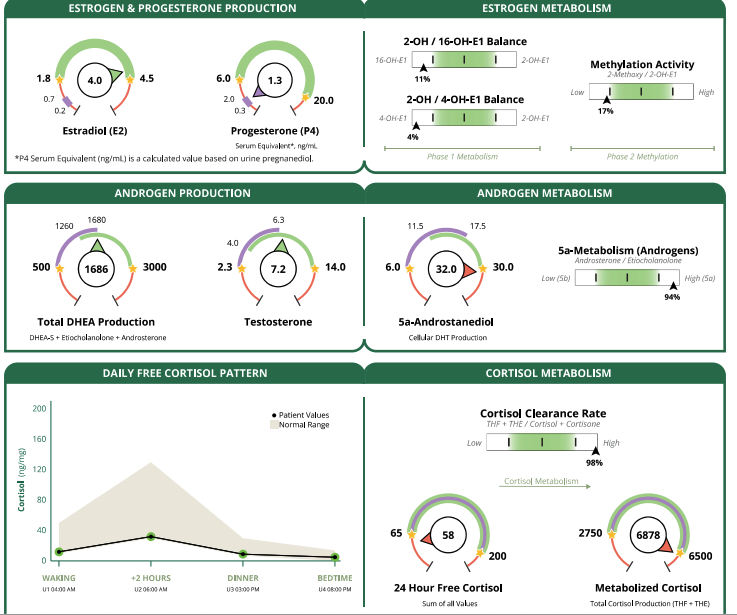
A small preview of what you'll receive. → Watch a 7-minute example walkthrough
The Package
Everything you get — delivered on your time.
A complete hormone assessment from collection to protocol, without having to schedule an appointment or make time for a call. Every DUTCH package includes:
- No waiting weeks (or months) for an appointment. Order today, your kit arrives within days — no scheduling delays standing between you and answers
- At-home DUTCH test kit shipped directly to your door — everything you need to collect at home when it's convenient, drop in the prepaid mailer
- A detailed health history + symptoms assessment so your results are interpreted in the context of your story — not just the lab values
- Personalized recorded video walkthrough of your results — not a live call where you're struggling to understand in real time. Watch on your time, replay, and share it with your partner, your doctor, or anyone else helping you make decisions
- Detailed recommendations translating your results into plain language — covering diet, sleep, lifestyle, supplements, and follow-up labs
- A customized 3+ month personalized plan with specific next steps for diet, lifestyle, and targeted supplementation — including EndoAxis, my preferred hormone-support line for DUTCH cases — no guessing
- 48 hours of follow-up questions in writing after you receive your results, with the option to continue support if you want it
- Up to 25% off professional-grade supplements through Fullscript (ongoing, all orders)
No live meeting required. Everything delivered virtually, on your time.
Choose Your Package
Three options based on what your body needs.
Not sure which is right for you? See the comparison just below the packages, or email me at kelly.shea.fdnp@gmail.com and I'll help you figure out the best starting point.
DUTCH Complete
The full hormone + cortisol panel.
Best for: Women with predictable cycles, women on birth control, postmenopausal women, or anyone who wants a complete look at sex hormones and cortisol rhythm at a single point in time (including men).
For men: A complete first look at testosterone, DHEA, and how those hormones are being metabolized, plus cortisol — ideal if you want the full picture without stress and sleep being your central concern.
Test includes: Sex hormones & their metabolites, 4-point cortisol rhythm, melatonin, organic acids, and oxidative stress marker.
Order DUTCH Complete →DUTCH Plus
DUTCH Complete + cortisol awakening response.
Best for: Women or men whose biggest concern is cortisol-driven — insomnia, waking at 3am, can't fall asleep, burnout, anxiety, or recovery from chronic stress. The detailed cortisol picture matters most here.
Includes: Everything in DUTCH Complete plus additional salivary cortisol samples for the cortisol awakening response (CAR) — the most detailed picture of HPA axis function available.
Order DUTCH Plus →DUTCH Plus + Cycle Mapping
The most complete picture for cycling women — hormones across the cycle and detailed cortisol.
Best for: Fertility challenges, PCOS, irregular or unpredictable cycles, partial hysterectomy (uterus removed, ovaries intact), endometrial ablation, Mirena IUD with ongoing symptoms, or symptoms that shift across the cycle (PMS, spotting, migraines, mood) — and cortisol-driven concerns like insomnia, 3am wakeups, or burnout layered on top.
Includes: Everything in DUTCH Plus plus nine additional urine collections across the cycle to map estrogen and progesterone patterns from follicular through luteal phase.
Order DUTCH Plus + Cycle Mapping →Still deciding?
Which package is right for you.
For many women, testing hormones at a single point in the cycle is enough. In other cases, symptoms fluctuate enough that we need to map hormones across the cycle. And sometimes, the most important question is what your cortisol is doing.
Men will get clear hormone answers about testosterone and estrogen with DUTCH Complete. DUTCH Plus has the same hormone data with additional cortisol markers, and may be considered if stress, sleep, or burnout is a main concern.
Many people also come to DUTCH while weighing hormone replacement therapy — whether that's BHRT in perimenopause or menopause, or testosterone support for men. DUTCH gives you a detailed baseline of where your hormones actually are and how your body is metabolizing them — useful information to bring to a conversation with a prescribing provider, both for deciding whether HRT makes sense and, if you're already on it, for seeing how your body is responding to your current dosage.
Start with DUTCH Complete if:
- You're postmenopausal, or
- You're on hormonal birth control
- Or you have predictable cycles with stable timing, and
- Cortisol & sleep aren't your main concern
- You want a clear, complete first look at sex hormones
Choose DUTCH Plus if:
- You wake at 3am and can't fall back asleep
- You can't fall asleep — wired but tired at night
- You're recovering from chronic stress or burnout
- You have anxiety or panic-feeling stress
- Cortisol is the bigger story than sex hormones for you
Add Cycle Mapping (DUTCH Plus + CM) if any of these apply:
- Fertility challenges or trying to conceive
- PCOS or irregular / unpredictable cycles
- Shifting or short luteal phases
- You're cycling without regular bleeding (partial hysterectomy, ablation, Mirena IUD)
- You're unsure when to test because of long or short cycles
- Your symptoms change across the cycle — PMS, spotting, migraines, mood shifts
Cycle Mapping adds nine collections across the cycle so we can see estrogen and progesterone patterns from follicular through luteal phase — not just a single point in time.
Still not sure? Email me at kelly.shea.fdnp@gmail.com with a quick description of what's going on and I'll point you to the right starting place.
Is this worth it?
Here's the honest math.
If you've already spent months (or years) guessing — the supplements that didn't stick, the cycle apps that just tracked the chaos without explaining it, the doctor visits at $300+ plus lab costs, the bloodwork that came back 'normal' while you felt anything but — you've likely already spent much more than this on not-knowing.
Most functional health offerings (including some of my own) are bundled into longer-term programs — memberships, multi-month packages, or signature coaching programs. Those make sense if you're looking for ongoing 1:1 support and accountability over months. But if what you actually want is clarity — the test, the interpretation, the plan — without committing to a full program, that's exactly what these packages are for.
What you're getting in any DUTCH package above:
- The test itself, with shipping included (up to $700 on from the lab, depending on the panel)
- No separate intake appointment — your health history is collected through digital forms instead of an appointment just for intake ($300-$500+ plus months of waitlists at many functional clinics)
- Professional interpretation of your results ($300+ at most clinics, where you sit through a one-time appointment trying to remember everything they said)
- Yours: a recorded video you can rewatch as often as you need.
- A custom plan built for you covering diet, sleep, lifestyle, and targeted supplementation (instead of waiting — and paying — for one or two more separate appointments)
- Priority direct access for 48 hours after your results — instead of waiting 2-3 weeks and another appointment cost to ask a question, you get quick written answers to your follow-up questions
- Ongoing Fullscript supplement discounts — yours to keep, often $150-300+ in savings on a typical 3-month hormone protocol alone
All of this without having to make a single appointment.
You're not paying for a test. You're paying for answers — and a plan you can actually follow.
How it works
From order to answers, here's what to expect.
Order your test
Complete checkout for the package you chose and your DUTCH kit will be on its way. You'll receive an email inviting you to set up your secure client portal through Practice Better.
Complete your intake
Watch for a few short forms in your portal — your health history, symptoms, and goals. These give me the full picture so your results are interpreted in your context, not just lab values. You'll also receive detailed instructions for how to prepare and time your collection (and if you ordered Cycle Mapping, when to start within your cycle).
Collect at home
When your kit arrives, collect your dried urine samples on the timing instructions provided (DUTCH Complete is collected over a single day; DUTCH Plus adds salivary cortisol samples; Cycle Mapping is collected over the course of your cycle). Drop the samples in the prepaid mailer when finished. No lab visit, no appointment, no waiting room.
Get your plan
About 2-3 weeks after the lab receives your samples, you'll receive a recorded video walkthrough of your results, a detailed written report, and a personalized 3+ month plan — including supplement recommendations from professional-grade brands I trust (discounted for you through Fullscript). All delivered digitally. No call or appointment required — just direct written support when you need it.
Honesty check
Is this right for you?
This is for you if...
- You have hormonal symptoms — PMS, irregular cycles, perimenopause, fatigue, mood, sleep, weight, skin, libido — that haven't resolved no matter what you've tried
- You've been told your labs are 'normal' but feel anything but
- You suspect cortisol or stress is part of the picture, but no one has ever actually looked at your cortisol rhythm
- You want data-driven, root-cause answers based on what's actually happening in your body
- You're tired of rushed appointments where you feel unheard — you want results delivered in a format you can actually absorb, on your time
- You have a history of hormonal birth control and your cycles haven't fully regulated since coming off — and you want to see what's actually happening underneath
- You're a man dealing with fatigue, low motivation, weight gain, low libido, or symptoms of declining testosterone or DHEA — DUTCH Complete works just as well for men as for women
- You want a personalized plan (diet, sleep, lifestyle, and targeted supplementation) to help rebalance your hormones based on your results
- You want a clear, detailed picture of your hormones to bring to your doctor — whether you're considering BHRT or just want results-driven information for the next conversation with your provider
This is probably not for you if...
- You want weekly 1:1 live calls or visits with your practitioner
- You're currently pregnant or breastfeeding (DUTCH testing isn't appropriate during these phases — HTMA is usually a better starting place)
- Your symptoms point more clearly to gut dysfunction (bloating, reflux, food sensitivities, unpredictable digestion) — GI-MAP may be a better starting place
- You feel like you've already tried everything and aren't open to a fresh approach — even one built specifically from your results
- You're looking for a birth control prescription (or another medication) to mask the symptoms rather than understand what's actually driving them — DUTCH is for women who want to look at the root cause
About the practitioner
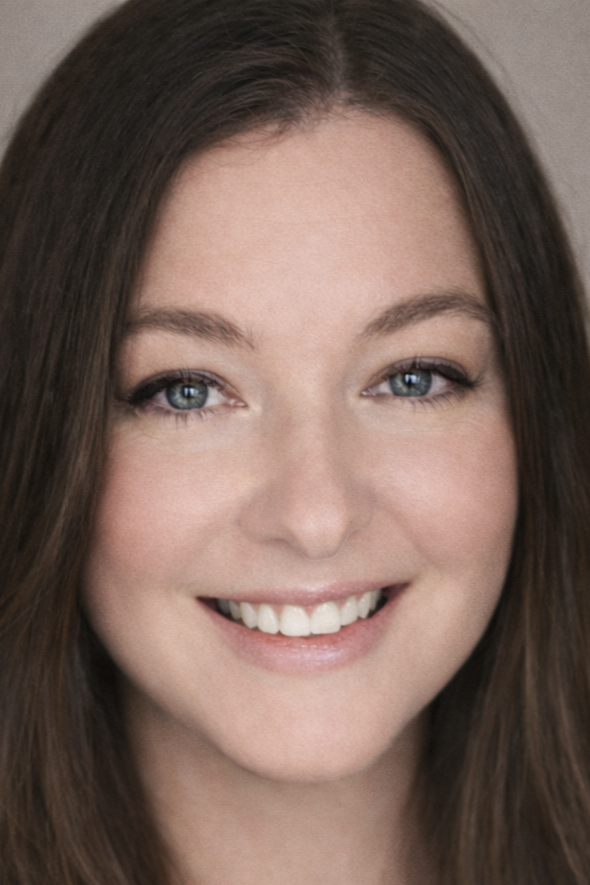
I've been where you are.
I'm a Functional Diagnostic Nutrition Practitioner who works with women navigating exactly what you're navigating right now.
I started in this work the same way most of my clients find me — frustrated. It took me years to figure out what was going on with my own body: cystic acne, hormone imbalances I couldn't get answers to, stubborn weight gain, losing half my hair, insomnia that wrecked me. I'd been told my labs were 'fine' while my symptoms told a different story. I'd tried elimination diets, supplements, and doctor visits — even naturopathic ones — that ended with 'cut carbs,' 'move more,' or a prescription I didn't want to take. I felt like no one truly understood what I was going through — like I was just supposed to accept feeling this way.
When I finally got functional hormone testing done — including a DUTCH — I got real answers in a matter of weeks. Not perfect answers, not a miracle, but data. I could finally see what my estrogen, progesterone, and cortisol were actually doing — and from that data, a plan that actually made sense for my body. If I'd started here in the beginning, I would have saved myself years of time, money, and frustration.
That's the work I do now. Over the last several years, I've interpreted hundreds of functional lab panels for women looking for the same kind of clarity. The recorded video format exists because most of my clients don't have time for another scheduled call — they need real answers, delivered in a way that fits their life.
In health,
Kelly
Questions
What you might be wondering.
What happens after I order?
You'll receive an email inviting you to set up your secure client portal through Practice Better, where all communication will take place. You'll be asked to complete a few short intake forms (health history, symptoms, goals) so your results are interpreted in full context. Your kit collection instructions, shipping and tracking information, and final results will all be sent directly to your portal.
How does the at-home collection work?
Your DUTCH kit arrives with clear instructions. For DUTCH Complete, you'll collect four small dried urine samples over the course of a single day. DUTCH Plus adds salivary cortisol samples on top of that. Cycle Mapping is collected over the course of your cycle on specific days. The collections themselves take just a few minutes each. Once you're done, drop everything in the prepaid mailer. No lab visit, no appointment needed.
How long until I get my results?
Typically 2-3 weeks after the lab receives your samples. Once your results are in, I'll send your personalized video walkthrough, written report, and full recommendations — all delivered through your client portal.
Do I really not have to get on a call?
Correct. I built this format specifically because most of my clients don't have time for one more thing on their calendar. Everything is delivered virtually through your client portal — your results video, your written report, and your personalized plan — so you can absorb it on your time, not on someone else's schedule.
And your questions still get answered. You'll have 48 hours of direct access after receiving results to submit follow-up questions in writing.
What if I have more questions after my 48-hour window?
You'll have the option to book additional support if you want it, but most clients find the video walkthrough and written report answer everything they need.
Do I need to do anything to prepare?
Yes — DUTCH has specific prep requirements (timing within your cycle if you're cycling, hydration guidance, certain supplements to pause beforehand, etc.). Full prep instructions will be sent through your portal after you order, and any questions that come up during collection will be answered promptly.
I'm on hormonal birth control — can I still test?
Yes. DUTCH Complete is a good fit for women on hormonal birth control. We won't see your natural cycling hormones (the pill suppresses those), but we will see your cortisol pattern, your androgens, your DHEA, your melatonin, and what your body is doing with the synthetic hormones you're taking. This is especially useful if you've been on BC for a long time and are starting to wonder what's actually going on underneath.
I just came off birth control — when should I test?
It's generally recommended to wait until you've had at least three natural cycles return before testing — that gives your body time to settle into its own rhythm so we're capturing your hormones, not the residual effects of the pill.
If three cycles have come and gone and your cycle still hasn't returned (or is highly unpredictable), Cycle Mapping is usually the better choice so we can see what's happening across multiple weeks instead of guessing at a single timing point. Email me if you're not sure which fits your situation.
Can men do DUTCH?
Yes — DUTCH Complete or Plus works just as well for men as for women. We'll see testosterone, DHEA, and how those hormones are being metabolized, plus cortisol rhythm and the rest of the panel. Useful for men dealing with fatigue, low motivation, weight gain, low libido, sleep issues, or symptoms of low testosterone.
Is this test HSA eligible?
Many clients are able to use HSA funds for functional testing, though eligibility depends on your specific plan. A receipt is available upon request.
Can I do this while pregnant or breastfeeding?
DUTCH testing isn't recommended during pregnancy or breastfeeding — hormones are shifting too dramatically during those phases to get an accurate baseline, and the protocols we'd build from it often aren't appropriate during pregnancy or nursing. If you're in this phase, HTMA is often a better starting place.
What if my results come back 'normal'?
In the DUTCH panels I've interpreted, I have yet to come across one that didn't reveal something actionable — whether that's an estrogen metabolism pattern, a cortisol rhythm that's off, low progesterone, an oxidative stress marker, or organic acids pointing to nutrient gaps. Even a 'clean' report provides valuable information — it rules out specific imbalances and helps direct next steps. You'll still receive a full interpretation and recommendations for next steps based on your symptoms and findings.
Still have questions?
Email me at kelly.shea.fdnp@gmail.com.
One last thing
Your body has been trying to tell you something.
You don't have to keep guessing at what it needs. After hundreds of lab panels, here's what I keep seeing: the women who stop guessing and start testing are the ones who finally stop cycling through protocols that don't work.
You can order today and have your kit within a few business days.
DUTCH Test + Practitioner Interpretation + Your Personalized Plan
Three package options to fit what your body needs.
Everything delivered on your time. No appointment required.
In health,
Kelly